
Recommended Reading on Black History & African American Genealogy
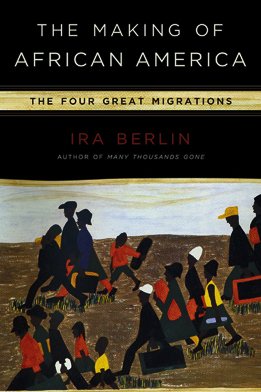
The Making of African America
A leading historian offers a sweeping new account of the African American experience over four centuries Four great migrations defined the history of black people in America: the violent removal of Africans to the east coast of North America known as the Middle Passage; the relocation of one million slaves to the interior of the antebellum South; the movement of more than six million blacks to the industrial cities of the north and west a century later; and since the late 1960s, the arrival of black immigrants from Africa, the Caribbean, South America, and Europe. These epic migrations have made and remade African American life. Ira Berlin’s magisterial new account of these passages evokes both the terrible price and the moving triumphs of a people forcibly and then willingly migrating to America. In effect, Berlin rewrites the master narrative of African America, challenging the traditional presentation of a linear path of progress.
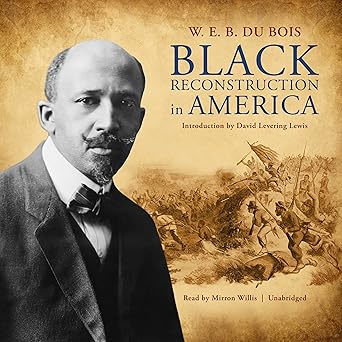
Black Reconstruction in America 1860-1880
This pioneering work was the first full-length study of the role black Americans played in the crucial period after the Civil War, when the slaves had been freed and the attempt was made to reconstruct American society.
Hailed at the time, Black Reconstruction in America has justly been called a classic.

A Short Story of Reconstruction
An abridged version of Reconstruction: America’s Unfinished Revolution, the definitive study of the aftermath of the Civil War, winner of the Bancroft Prize, Avery O. Craven Prize, Los Angeles Times Book Award, Francis Parkman Prize, and Lionel Trilling Prize.
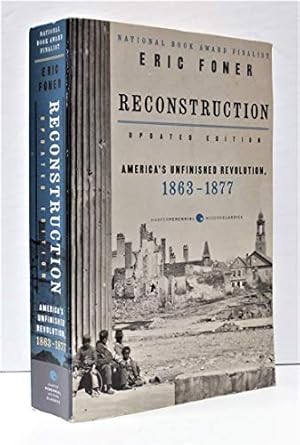
Reconstruction: America’s Unfinished Revolution
From the “preeminent historian of Reconstruction” (New York Times Book Review), the prize-winning classic work on the post-Civil War period that shaped modern America.
Eric Foner’s “masterful treatment of one of the most complex periods of American history” (New Republic) redefined how the post-Civil War period was viewed.
Reconstruction chronicles the way in which Americans—black and white—responded to the unprecedented changes unleashed by the war and the end of slavery. It addresses the ways in which the emancipated slaves’ quest for economic autonomy and equal citizenship shaped the political agenda of Reconstruction; the remodeling of Southern society and the place of planters, merchants, and small farmers within it; the evolution of racial attitudes and patterns of race relations; and the emergence of a national state possessing vastly expanded authority and committed, for a time, to the principle of equal rights for all Americans.
This “smart book of enormous strengths” (Boston Globe) remains the standard work on the wrenching post-Civil War period—an era whose legacy still reverberates in the United States today.
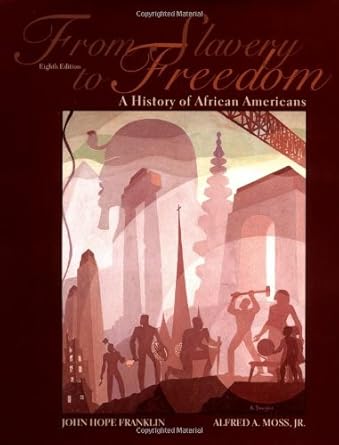
From Slavery to Freedom: A History of African Americans
This is the dramatic, exciting, authoritative story of the experiences of African Americans from the time they left Africa to their continued struggle for equality at the end of the twentieth century.
Since its original publication in 1947, From Slavery to Freedom has stood as the definitive his-tory of African Americans. Coauthors John Hope Franklin and Alfred A. Moss, Jr., give us a vividly detailed account of the journey of African Americans from their origins in the civilizations of Africa, through their years of slavery in the New World, to the successful struggle for freedom and its aftermath in the West Indies, Latin America, and the United States.
This eighth edition has been revised to include expanded coverage of Africa; additional material in every chapter on the history and current situation of African Americans in the United States; new charts, maps, and black-and-white illustrations; and a third four-page color insert. The authors incorporate recent scholarship to examine slavery, the Civil War, Reconstruction, and the period between World War I and World War II (including the Harlem Renaissance).
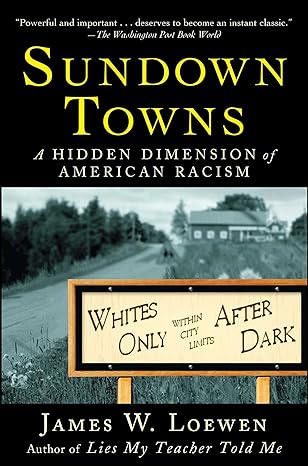
Sundown Towns: A Hidden Dimension of American Racism
Bestselling author of Lies My Teacher Told Me, James W. Loewen, exposes the secret communities and hotbeds of racial injustice that sprung up throughout the twentieth century unnoticed, forcing us to reexamine race relations in the United States.
In this groundbreaking work, bestselling sociologist James W. Loewen, author of the national bestseller Lies My Teacher Told Me, brings to light decades of hidden racial exclusion in America. In a provocative, sweeping analysis of American residential patterns, Loewen uncovers the thousands of “sundown towns”—almost exclusively white towns where it was an unspoken rule that blacks could not live there—that cropped up throughout the twentieth century, most of them located outside of the South. These towns used everything from legal formalities to violence to create homogenous Caucasian communities—and their existence has gone unexamined until now. For the first time, Loewen takes a long, hard look at the history, sociology, and continued existence of these towns, contributing an essential new chapter to the study of American race relations.
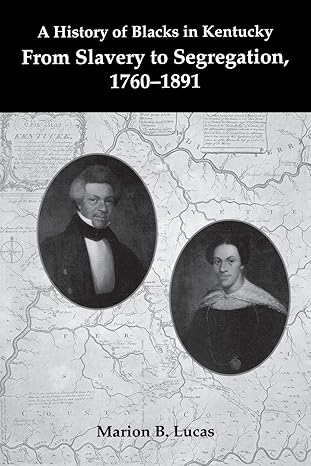
A History of Blacks in Kentucky, Volume 1
A History of Blacks in Kentucky traces the role of blacks from the early exploration and settlement of Kentucky to 1891, when African Americans gained freedom only to be faced with a segregated society. Making extensive use of numerous primary sources such as slave diaries, Freedmen’s Bureau records, church minutes, and collections of personalpapers, the book tells the stories of individuals, their triumphs and tragedies, and their accomplishments in the face of adversity.
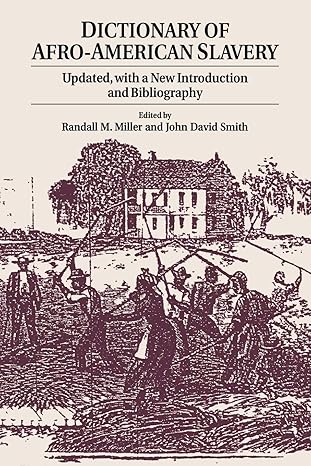
Dictionary of Afro-American Slavery
In 1988 Greenwood Press published the Dictionary of Afro-American Slavery to wide acclaim by the library community and scholars in the field. The Dictionary was issued at a time when the study of slavery commanded a central place in American historical thinking and, increasingly, in a host of other disciplines as well. Interest in slavery has not abated. Yet, despite a growing sophistication in methodology and complexity of analysis, the basic contours of the study of slavery remain much the same as when the Dictionary first appeared. To take the latest scholarship into account, the editors have added a new introduction surveying the principal themes in research and writing over the past decade and have appended a bibliography, arranged by broad thematic areas keyed to topics treated in the text.
In 1988 Greenwood Press published the Dictionary of Afro-American Slavery to wide acclaim by the library community and scholars in the field. It was selected as a Best Reference Book by Library Journal, a Choice Outstanding Academic Book, and an American Library Association Outstanding Reference Book. Historian John Hope Franklin declared it an indispensable tool for all students of human bondage, while the Journal of the Early Republic announced it has something for everyone interested in Afro-American slavery, from the general reader to undergraduate student to professional historian.
Dictionary of Afro-American Slavery
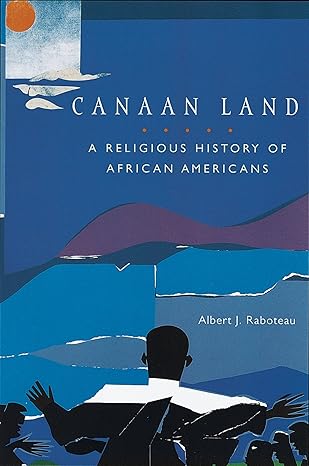
Canaan Land: A Religious History of African Americans
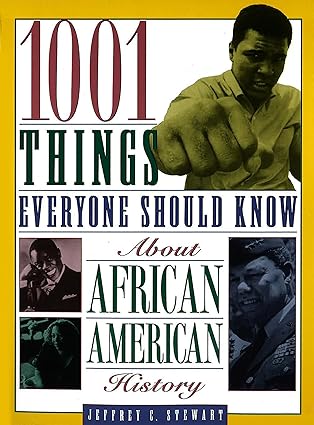
1001 Things Everyone Should Know About African American History
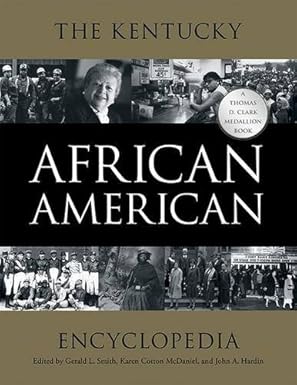
The Kentucky African American Encyclopedia
The story of African Americans in Kentucky is as diverse and vibrant as the state’s general history. The work of more than 150 writers, The Kentucky African American Encyclopedia is an essential guide to the black experience in the Commonwealth.
The encyclopedia includes biographical sketches of politicians and community leaders as well as pioneers in art, science, and industry. Kentucky’s impact on the national scene is registered in an array of notable figures, such as writers William Wells Brown and bell hooks, reformers Bessie Lucas Allen and Shelby Lanier Jr., sports icons Muhammad Ali and Isaac Murphy, civil rights leaders Whitney Young Jr. and Georgia Powers, and entertainers Ernest Hogan, Helen Humes, and the Nappy Roots. Featuring entries on the individuals, events, places, organizations, movements, and institutions that have shaped the state’s history since its origins, the volume also includes topical essays on the civil rights movement, Eastern Kentucky coalfields, business, education, and women.
For researchers, students, and all who cherish local history, The Kentucky African American Encyclopedia is an indispensable reference that highlights the diversity of the state’s culture and history.
The Kentucky African American Encyclopedia
The story of African Americans in Kentucky is as diverse and vibrant as the state’s general history. The work of more than 150 writers, The Kentucky African American Encyclopedia is an essential guide to the black experience in the Commonwealth.
The encyclopedia includes biographical sketches of politicians and community leaders as well as pioneers in art, science, and industry. Kentucky’s impact on the national scene is registered in an array of notable figures, such as writers William Wells Brown and bell hooks, reformers Bessie Lucas Allen and Shelby Lanier Jr., sports icons Muhammad Ali and Isaac Murphy, civil rights leaders Whitney Young Jr. and Georgia Powers, and entertainers Ernest Hogan, Helen Humes, and the Nappy Roots. Featuring entries on the individuals, events, places, organizations, movements, and institutions that have shaped the state’s history since its origins, the volume also includes topical essays on the civil rights movement, Eastern Kentucky coalfields, business, education, and women.
For researchers, students, and all who cherish local history, The Kentucky African American Encyclopedia is an indispensable reference that highlights the diversity of the state’s culture and history.
A History of Blacks in Kentucky, Volume 2,
Published by the Kentucky Historical Society & Distributed by the University Press of Kentucky This is the second part of a two-volume study which covers the entire spectrum of the black experience in Kentucky from earliest exploration and settlement to 1980. (Click here for information on the first volume, From Slavery to Segregation, 1760-1891.) Mandated and partially funded by the Kentucky General Assembly in 1978, this pathbreaking work is the most comprehensive consideration of the subject ever undertaken. It fills a long-recognized void in Kentucky history. George C. Wright describes the struggle of blacks in the twentieth century to achieve the promise of political, social, and economic equality. From the rising tide of racism and violence at the turn of the century to the civil rights movement and school integration in later decades, Wright describes the accomplishments, frustrations, and defeats suffered by the race, concluding that even in 1980 only a few blacks had actually achieved the long-sought toal of equality.
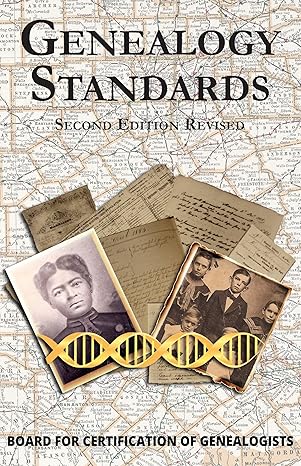
Genealogy Standards,
PFamily historians depend upon thousands of people unknown to them. They exchange research with others; copy information from books and databases; and write libraries, societies, and government offices. At times they even hire professionals to do legwork in distant areas and trust strangers to solve important problems. But how do family historians know they are producing or receiving trustworthy results? This official manual from the Board of Certification for Genealogists, essentially a users’ guide for family historians, provides standards for genealogical researchers to assess their own and others’ work. The revised second edition increases the clarity of DNA and privacy standards. Those standards are especially useful in the twenty-first century, when many genealogists use a complex new tool―DNA testing―and trace living people more often than they did in the past.
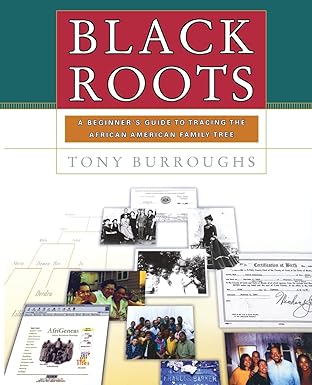
Black Roots: A Beginner’s Guide
Trace, document, record, and write your family’s history with this easy-to-read, step-by-step authoritative guide.
Finally, here is the fun, easy-to-use guide that African Americans have been waiting for since Alex Haley published Roots more than twenty-five years ago. Written by the leading African American professional genealogist in the United States who teaches and lectures widely, Black Roots highlights some of the special problems, solutions, and sources unique to African Americans. Based on solid genealogical principles and designed for those who have little or no experience researching their family’s past, but valuable to any genealogist, this book explains everything you need to get started, including: where to search close to home, where to write for records, how to make the best use of libraries and the Internet, and how to organize research, analyze historical documents, and write the family history.

Researcher’s Guide to American Genealogy
In every field of study, there is one book that rises above the rest in stature and authority and becomes the standard work in the field. In genealogy that book is Val Greenwood’s “Researcher’s Guide to American Genealogy.” Arguably the best book ever written on American genealogy, it instructs the researcher in the timeless principles of genealogical research, while identifying the most current classes of records and research tools. This edition of this celebrated book provides a clear, comprehensive, and up-to-date account of American genealogy–no sound genealogical project is complete without it. “Recommended as the most comprehensive how-to book on American genealogical and local history research”–Library Journal
Evidence Explained: Citing Sources from Artifacts to Cyberspace
History is not just a collection of documents– and all records are not created equal. To analyze and decide what to believe, we also need certain facts about the records themselves.
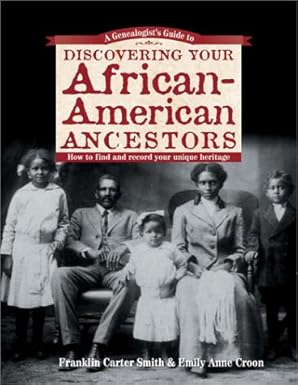
A Genealogist’s Guide to Discovering Your African-American Ancestors
A Genealogist’s Guide to Discovering Your African-American Ancestors provides easy, step-by-step instruction for researching slave and free black ancestors pre- and post-Civil War. More than an exhaustive list of resources, this book draws a map to guide researchers, whether novice or experienced, through the genealogical wilderness to their ancestors long forgotten. It introduces readers to a systematic approach that should help eliminate months or years of aimless wondering. And, the unique and winning combination in authors – an African-American who can relate his research experience into black slave family history and a white slave-owning family who were also his ancestors, and a best-selling, nationally recognised genealogical author – will make this book stand out among the rest.
A Genealogist’s Guide to Discovering Your African-American Ancestors
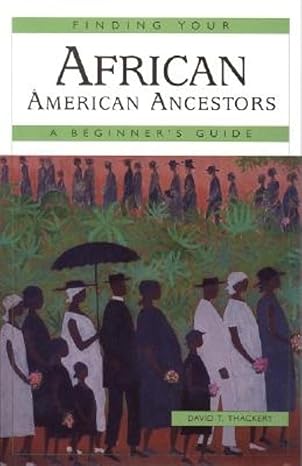
Although the search for African American ancestry prior to the Civil War is challenging, the difficulties are not always insurmountable. Finding Your African American Ancestors takes you through your ancestors’ transition from slavery to freedom, and helps you find them using the federal census, plantation records, and other helpful sources. The book also considers ways to locate runaway slave advertisements, to identify an ancestor’s military regiment, and to access the valuable information from The Freedman’s Savings and Trust records.

Finding and Using African American Newspapers,
Finally a book has come along that addresses the difficult topic of African American newspaper research. Are there actually black newspapers out there? How do I locate them? Is there much in them aside from obituaries? Finding and Using African American Newspapers demystifies the process of locating these newspapers and provides researchers with a plethora of tips and strategies on how to track down those genealogically rich social columns.